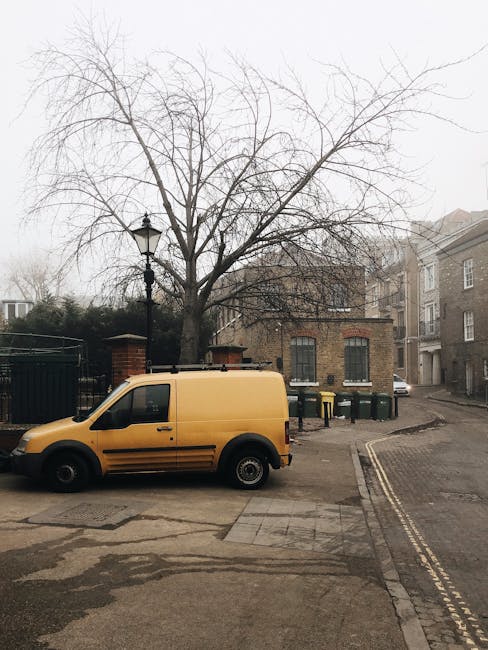
Camden Council parking permit rules for Kentish Town cleaners and vans
If you clean homes, offices, flats, or short-let properties in Kentish Town, parking can make or break the day. One missed bay, one unclear permit, and suddenly the job starts late, the van is circling, and everyone is a bit frazzled before the mop even comes out. This guide explains Camden Council parking permit rules for Kentish Town cleaners and vans in plain English, so you can plan smarter, avoid avoidable fines, and keep your cleaning schedule moving.
To be fair, most cleaners are not trying to become parking experts. You just want a legal, sensible place to leave a van while you carry gear, protect time, and get on with the actual work. That is exactly what this article is for: practical, local, no-nonsense guidance with a few real-world pointers thrown in.
Table of Contents
- Why Camden Council parking permit rules matter
- How the permit system works for cleaners and vans
- Key benefits and practical advantages
- Who needs this and when it makes sense
- Step-by-step guidance
- Expert tips for better results
- Common mistakes to avoid
- Tools, resources and recommendations
- Law, compliance, standards and best practice
- Options, methods and comparison table
- Case study or real-world example
- Practical checklist
- Conclusion
- Frequently asked questions
Why Camden Council parking permit rules for Kentish Town cleaners and vans Matters
Parking is not just a convenience issue. In a busy place like Kentish Town, it affects punctuality, labour costs, fuel use, and customer experience. A cleaner who arrives on time but cannot park nearby is still, well, late in the practical sense. The clock does not care that the van is three streets away.
For cleaners, parking rules matter even more because the job often involves repeated loading and unloading. Buckets, vacuums, carpet machines, extension leads, ladder kits, upholstery tools, fresh supplies, waste bags... it adds up quickly. The closer and more legally the vehicle can stop, the smoother the job usually goes.
There is also the risk side. If a van stops in the wrong place, penalties can follow. If the vehicle is obstructing traffic or parked in a way that blocks residents, you can get complaints as well as enforcement. In residential streets, that can become awkward fast. No one enjoys being that van outside the building with somebody peering at the windscreen and shaking their head.
Expert summary: for Kentish Town cleaners, parking compliance is a time-saving tool as much as a legal duty. The right setup reduces stress, avoids penalties, and protects your daily schedule.
If your business handles domestic cleaning, end of tenancy cleaning, office cleaning, or one-off jobs, you will feel the parking impact most sharply on tight turnarounds and multi-stop days. That is especially true if you also offer deep cleaning or after builders cleaning, where equipment is heavier and access matters more.
How Camden Council parking permit rules for Kentish Town cleaners and vans Works
Camden's parking controls are designed to manage demand on street space. For cleaners and vans, the key question is usually not whether parking is available, but whether your vehicle can legally stop in a particular place and for how long.
In practical terms, you should think in layers:
- Is the street controlled? Many streets around Kentish Town are subject to parking restrictions, permit bays, shared-use bays, loading restrictions, or visitor controls.
- Does the van qualify for the type of parking you need? Van size, vehicle class, and intended use all matter.
- Do you need a resident, business, or visitor arrangement? The right permission depends on whether you are parking as a worker, business operator, contractor, or short-term visitor.
- Are you only stopping briefly to load and unload? Loading can sometimes be treated differently from general parking, but only if it is genuine and done within the rules.
That last point causes a lot of confusion. Some people assume a van can pause anywhere if there are tools in the back. Not quite. If you are not actively loading or unloading, enforcement may treat the stop as normal parking. And if the bay or street is restricted, it can still be a problem even when you are carrying kit.
For cleaners working in Kentish Town, the day often falls into one of three parking scenarios:
- Short stop: you need to get close, drop off equipment, and move on.
- Job-length stop: the van stays parked while the team is inside cleaning.
- Multi-job route: you are moving between several properties and need predictable parking across the day.
Each one needs a slightly different approach. A one-hour bathroom refresh is not the same as a full regular cleaning round, and it is definitely not the same as a full-day commercial cleaning contract.
What usually makes the biggest difference
From a practical point of view, the biggest difference is whether the van is treated as a normal private vehicle or as a commercial vehicle that needs access planning. Some cleaners use small cars or small vans; others use larger panel vans with multiple stations of tools. The bigger the van, the more likely it is to face size, space, or loading headaches. Simple, but true.
You will also want to think about the job type. A window cleaning visit may require different access than carpet cleaning or sofa cleaning, especially when the van is carrying bulky equipment. The practical parking plan should match the work, not just the postcode.
Key Benefits and Practical Advantages
Sorting parking properly may not sound glamorous, but it pays back in very ordinary ways. And ordinary ways are what keep a cleaning business reliable.
- Less wasted time: no last-minute street hunting or double-backing.
- Lower risk of penalties: legal parking reduces the chance of a ticket or warning notice.
- Better customer experience: the team arrives calmer and starts faster.
- Improved job efficiency: equipment can be unloaded nearer the property.
- Less physical strain: fewer long carries with vacuums, chemicals, or machines.
- Cleaner business image: organised arrivals look professional, especially in tight residential streets.
There is also a subtle planning benefit. Once your parking approach is fixed, quoting and scheduling become easier. For example, if a cleaning route in Kentish Town regularly needs an extra ten minutes for legal parking and unloading, that time can be built into the booking. A small adjustment. A big difference.
Businesses that present clear service information and transparent processes tend to handle these logistics better. If you are comparing providers or refining your own operation, pages like about us, health and safety policy, and insurance and safety can help customers understand how the business thinks about risk, access, and professionalism.
Who This Is For and When It Makes Sense
This topic matters most if you are one of the following:
- a self-employed cleaner working in Kentish Town
- a small cleaning company using one or more vans
- a team leader managing multiple domestic visits
- a contractor handling office, communal area, or end-of-tenancy work
- a property manager booking repeat cleaning visits
It makes sense whenever your work depends on street access, timed arrivals, or carrying equipment from vehicle to property. If you mostly work with handheld tools and can arrive by tube or bus, parking may be a smaller issue. But if you are carrying vacuums, steamers, mops, cleaning fluids, and fresh linen, then yeah, parking is part of the job.
It is especially important when you clean:
- large homes with limited driveways
- converted flats on narrow streets
- shared entrances or managed blocks
- Airbnb or short-let properties with tight turnaround windows
- sites with loading restrictions or resident permit zones
If your work includes Airbnb cleaning, move-in cleaning, or move-out cleaning, parking tends to become a same-day pressure point. Check-in and check-out windows leave little room for faffing about, as people say.
Step-by-Step Guidance
Here is a practical way to approach Camden parking for Kentish Town cleaning jobs without turning it into a full-time admin job.
1. Identify the exact street and time window
Do not rely on the area name alone. Kentish Town has different streets, different restrictions, and different loading realities. One road might allow short stops; the next might be permit-only. The details matter.
Write down the full address, arrival time, expected finish time, and whether the vehicle needs to stay on street or can move after unloading.
2. Check the type of vehicle you are using
A small hatchback used for domestic rounds and a long-wheelbase van used for a heavy-duty clean are not treated the same in practice. Measure the vehicle once. Then save those details. The van height, length, and weight class can change where you can safely stop and how easy it is to access bays.
3. Decide whether the stop is parking or loading
Be honest here. If you are dropping equipment and returning quickly, that may be a loading stop. If you are leaving the van while the team works for two or three hours, that is normal parking and should be treated as such.
People sometimes blur the line because it feels convenient. But enforcement does not really care about the feeling. It cares about the actual use.
4. Choose the right permit or parking approach
Depending on the job and vehicle, the solution might be a permit, a paid bay, a loading bay if appropriate, or a pre-arranged customer parking spot. For repeat work, a consistent plan is usually best. For one-off visits, flexible parking may be enough.
5. Build parking time into the schedule
Add buffer time. Even ten minutes can save a lot of stress. In the early morning, streets may be quieter, but demand can rise quickly. By midday, bays can be full and your calm little plan starts wobbling. That is normal.
6. Brief the cleaner or driver before arrival
Make sure the person driving knows the vehicle height, the likely bay type, the unloading plan, and the fallback option if the main space is taken. A quick message before arrival can prevent a lot of unnecessary circling.
7. Keep evidence of genuine work stops
Where relevant, keep job notes, booking details, or route records. If there is ever a dispute about whether the vehicle was loading or simply parked, clear records help show the context. Nothing fancy. Just tidy records.
Expert Tips for Better Results
Here are the little things that tend to make a real difference in the field.
- Use a standard arrival note: include address, access instructions, and parking plan in one place.
- Map van-friendly jobs together: cluster jobs geographically so the van is not being moved every hour.
- Keep a basic parking playbook: write down the usual rules for your most common Kentish Town streets.
- Take photos when needed: if a loading arrangement is being used, a quick time-stamped photo can help confirm the situation.
- Train the team on permit discipline: one person improvising can create the whole problem.
- Review job types seasonally: winter schedules, holiday bookings, and student move-outs can all change parking pressure.
A useful habit is to separate your "parking brain" from your "cleaning brain". It sounds a bit silly, but it works. One part of the day is about compliance and timing; the other is about delivering a spotless result. Mixing the two tends to create muddle.
If your route includes more specialised work like office cleaning or communal area cleaning, it is worth standardising your arrival routine. The same applies to after builders cleaning, where equipment tends to be heavier and access can be messy. Dusty boots, noisy roads, tools everywhere - you want the vehicle side of the job to be the easy bit.
Common Mistakes to Avoid
Most parking problems are not caused by dramatic mistakes. They come from small assumptions repeated over and over.
- Assuming all of Kentish Town has the same rules. It does not.
- Using a permit plan meant for residents when the vehicle is a work van. That can backfire quickly.
- Leaving the van too far away "just for a minute". Those minutes become a long walk with equipment.
- Forgetting that loading and parking are not the same thing.
- Not checking time restrictions. A space that works at 8:30am may not work at 11:00am.
- Ignoring customer access notes. Some properties have courtyards, gates, or management restrictions that affect where a van can sit.
- Building no buffer at all. That is a classic one. Too optimistic by half.
Another common issue is poor communication between office and driver. A job can be booked perfectly, but if the driver does not know the nearest legal stop or whether a loading bay is available, the schedule starts slipping. It happens more often than people admit.
Tools, Resources and Recommendations
You do not need a complicated tech stack. A few practical tools are enough.
- Job management notes: keep the parking instruction with the booking, not in a separate message thread.
- Route planning: group jobs by street or cluster where possible.
- Vehicle profile sheet: note size, fuel type, height, and standard kit carried.
- Site access checklist: include lift access, gate codes, parking instructions, and unloading points.
- Internal service notes: link parking expectations to the job type, especially for one-off cleaning, regular cleaning, or house cleaning.
For customers comparing a cleaner or looking for a more organised provider, it can help to review transparent business pages such as pricing and quotes, terms and conditions, and recycling and sustainability. Those pages tell you a lot about how carefully a business runs its work, not just how tidy the final result looks.
If you are planning a cleaning job with specialist upholstery or fabric care, the same parking logic still applies. In fact, it matters more when you are carrying bulky kit for upholstery cleaning, rug cleaning, or mattress cleaning.
Law, Compliance, Standards, or Best Practice
Parking rules in Camden are part of local traffic regulation, and the practical message is straightforward: follow the signed restrictions for the street and the bay you are using. Where a permit is needed, it must suit the vehicle and the purpose. Where loading is allowed, it must be genuine loading. Where waiting is restricted, do not treat it as a free-for-all.
For cleaners and van users, best practice usually includes the following:
- read the local signs every time, even on familiar streets
- do not assume a previous job's parking arrangement will suit the next one
- keep the vehicle and job purpose aligned with the parking method
- plan for access, not just parking
- use written notes where parking is tight or contested
There is also a broader duty of care angle. A business that parks carefully, communicates clearly, and avoids blocking access is generally easier for clients, neighbours, and building managers to work with. That is not just about avoiding a ticket. It is about professional conduct.
If your business also follows formal operational standards, it may be useful to align parking planning with your health and safety policy and insurance and safety approach. The logic is simple: safer parking usually means safer lifting, better access, and fewer rushed mistakes. Not glamorous, but very real.
Options, Methods, or Comparison Table
There is no single perfect parking method for every cleaner or van. The right choice depends on the job length, street layout, and how often you work in the same area. Here is a simple comparison to help you think it through.
| Option | Best for | Strengths | Watch out for |
|---|---|---|---|
| Permit-based parking | Repeat jobs in controlled streets | Predictable, familiar, easier to plan | Needs correct vehicle and permit type |
| Paid on-street parking | Occasional visits or flexible work | Simple and immediate | Costs can build up over time |
| Loading bay use | Short, genuine loading/unloading | Close access for kit movement | Only works if the stop truly qualifies |
| Customer-provided parking | Homes or managed sites with space | Often the easiest option | Must be confirmed in advance |
| Off-street parking nearby | Longer cleans or bulky kit | Reduces bay risk and stress | Can mean extra walking distance |
If you are doing a same-day turnaround, especially for move-out cleaning or end of tenancy cleaning, certainty tends to matter more than saving a few minutes. A predictable parking spot can be worth far more than an improvised one.
Case Study or Real-World Example
Here is a realistic example from the sort of situation many Kentish Town cleaners run into.
A small two-person team is booked for a flat clean near a busy residential street. The job includes kitchen, bathroom, and living room cleaning, plus a bit of upholstery work. They arrive in a medium-sized van with vacuums, cloths, chemicals, and a portable steamer. The first thought is to pull up close and unload fast. Sensible instinct.
But the street is tight, parking is controlled, and the bays fill quickly. Instead of guessing, the team checks the access notes, identifies a legal stop nearby, unloads in one controlled trip, and moves the van to the agreed parking position. The job starts a little later than planned, but the work goes smoothly because nobody is dragging gear across the wrong half of the street.
That sounds minor, but it changes the whole mood of the day. Less rushing. Fewer little annoyances. Better focus once inside. And honestly, that calm start often shows up in the final finish too.
The same approach works whether the job is a house cleaning visit, a oven cleaning appointment, or a more detailed carpet cleaning call. The parking decision is small, but it ripples through the whole booking.
Practical Checklist
Use this checklist before a Kentish Town job with a van.
- Confirm the full address and postcode
- Check the expected arrival and finish time
- Identify the vehicle type and size
- Confirm whether the job needs loading only or longer parking
- Note any access restrictions, gates, or permits
- Decide the fallback parking option if the first choice is full
- Tell the driver where to stop and where to unload
- Allow buffer time for parking and walking
- Keep job notes in case parking is questioned later
- Review the plan after the visit and improve it next time
Quick self-check: if the parking plan sounds vague, it probably is. Tighten it before the van starts rolling.
Conclusion
Camden Council parking permit rules for Kentish Town cleaners and vans can look fiddly at first, but the practical idea is simple: know the street, know the vehicle, know the stop type, and do not assume today's job works like yesterday's. Once you build that habit, parking becomes less of a daily annoyance and more of a quiet, manageable part of the workflow.
For cleaners, that means better timing, less stress, and a more professional experience for customers. For van operators, it means fewer surprises and a safer, tidier way of working in one of London's busier neighbourhoods. Not exciting, perhaps. But effective. And in a service business, effective is what counts.
If you are reviewing your wider service setup, it can also help to look at the rest of your business information, from contact details to policy pages, so customers see a well-run operation from the first click onwards. Clear information builds trust. Always has.
Get a free quote today and see how much you can save.
Frequently Asked Questions
Do Kentish Town cleaners need a special parking permit for a van?
Sometimes, but not always. It depends on the street controls, the vehicle type, and whether you are parking for a full job or simply loading and unloading. The safest approach is to check the exact location and match the parking method to the work.
Can a cleaner use a loading bay for a full cleaning appointment?
Usually not unless the bay and local restrictions genuinely allow it. Loading bays are generally for active loading or unloading. If the van stays while the team works inside, that is normally treated as parking rather than loading.
What if the street is full when I arrive?
Have a fallback plan before you reach the street. That might be a nearby legal bay, off-street parking, or a customer-approved space. A backup option saves time and stops the job from turning into a slow, annoying hunt.
Are bigger cleaning vans harder to park in Camden?
Yes, in practical terms they usually are. Bigger vans need more space and may be less flexible in narrow streets. If your business uses larger vehicles, parking planning becomes even more important.
How early should cleaners arrive if parking is tight?
Build in extra time, especially for busy streets or repeat residential routes. Even a small buffer can make the difference between a calm start and a rushed one. In Kentish Town, that buffer is rarely wasted.
Is it better to plan parking by street or by job type?
Both, ideally. Street rules tell you what is legal; job type tells you what is practical. A deep clean with heavy equipment may need a different parking solution from a quick domestic refresh.
What should I tell clients about parking for their property?
Ask for the nearest legal stop, whether a visitor space exists, and whether any building management rules apply. Clear access notes prevent misunderstandings and help the cleaner arrive prepared.
Do repeat cleaning routes help with parking planning?
Definitely. Repeat routes let you learn which streets are difficult, which bays are reliable, and where the easiest unloading points are. Over time, that knowledge saves a lot of effort.
Should I keep records of parking decisions?
Yes, especially for tighter streets or jobs where loading status could be questioned. Simple job notes, arrival times, and access instructions are usually enough. Nothing fancy, just tidy.
How do parking rules affect pricing for cleaning jobs?
Parking can affect job timing and travel effort, so it may influence pricing or quote structure. Businesses that manage this well often explain it clearly in their pricing and quotes approach.
Is parking planning different for office cleaning and domestic cleaning?
Yes. Office cleaning may involve set access arrangements, shared entrances, and evening timings, while domestic work often depends more on street parking and residential restrictions. The principles are similar, but the day-to-day details are different.
What is the simplest way to avoid parking mistakes?
Check the exact street, confirm the vehicle size, decide whether you are loading or parking, and keep a backup plan. That alone prevents a surprising amount of hassle.